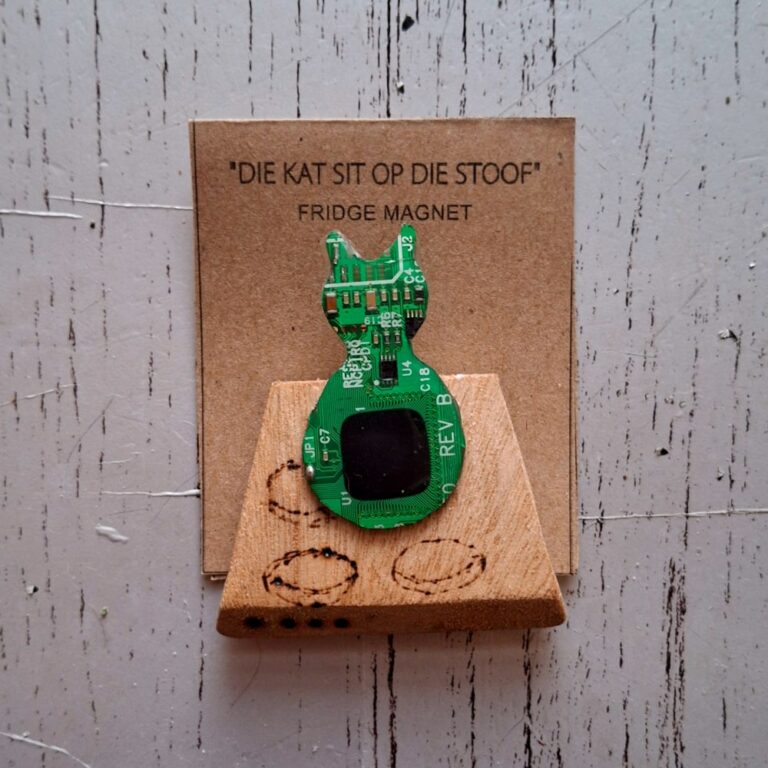
The Moral Behind The Afrikaans Saying: Kat Aan Die Stert Beet
Ignorance is bliss. Indeed, but it can also leave you thoroughly embarrassed.
The backstory behind the Afrikaans idiom “kat aan die stert beet” (taking the cat by the tail—meaning to get hold of something the wrong way or jump to conclusions) begins with a black cat left behind by an army troop before Dad gave him the boot. As a kid, I knew little about cats, so the furry creature provided me with endless entertainment. Especially when playing got him so wound up that he’d twist sideways, roll his eyes, arch her back into a hump with a sickle-shaped tail, and perform a sort of hypnotic dance across the rug on two legs.
Hence, naturally, the name Elvis. To us, this almost rockstar behavior was completely wild—and all delivered with such a fiery attitude despite his tiny size. Elvis, or “L-Vis” for short, developed all kinds of quirks, as animals who get a lot of attention often do.
Elvis was quite attached to humans… Especially to me, of cause! We were kindred spirits afterall. Years ago, when I was in school, it was still safe enough to walk to school. I was late on the regular, because I kept having to turn back to lock my little “tail” inside the house.
Elvis particularly loved coming to look for me over at the neighbor’s place. This black little rascal would often walk straight into their long, dark hallway—triggering blood-curdling screams from their house.
My little King loved walking, and before long, I had him on a leash! It caused a stir in our small town and did very little to help the fact that most of the people (including my sister!) referred to me as “pretty weird”.
Once a year, the family would drive to the Cederberg over Katbakkies Pass from Jacaranda City with Elvis in tack. Upon arrival, the field mice had a rough time under the paws of this small black predator. Even a mole paid the price one dark moon night. Naturally, the catch was always brought home with great pride for the rest of the family to admire and adore.
One December, there were 42 mice… accounted for. And Dad and the “deserving cat” finally called a truce.
But one day, Elvis suddenly started acting really strange. There was non-stop meowing and rolling around, and we were suddenly amazed by this newly affectionate male cat. Well, the troop did say it was a male… but suddenly we weren’t so sure. Someone mentioned that it’s actually really difficult to tell these things… with cats.
The only option left was a trip to the vet. Arriving there, desperate and without an appointment, the waiting room was packed with people cradling a variety of wilted pets on their laps.
I walked up to the receptionist, Elvis clutched tightly in my arms. Still meowing. She peered annoyed over her glasses and asked curtly if she could help me. By the way: this question always catches me off guard, because the exact same follow-up thoughts immediately race through my head. First, I want to say, “I don’t know”—followed quickly by, “Will you be able to help me?” Second, people usually ask this question in a way that gives you the distinct impression they don’t actually want to help.
But back to my dilemma—she asks if she can help, and I don’t really know what to say. How is it going to sound if I tell her I don’t know whether my cat is male or female? She gives me a commanding look, and I stare back helplessly. When Elvis lets out another long, desperate meeeooowww, I lean over the counter toward the receptionist and whisper softly: “I’m unsure about my cat’s gender… you see, this is my first cat and someone told me it’s very difficult to tell with cats… so I’d like to consult the vet…”
She leaps up from behind her counter with the words: “Wait, I’ll take a quick look for you!”
I try to stop her, but within seconds she corners me, grabs the cat by the tail, lifts her high into the air, and scrutinizes the animal’s private parts. And with that, she shouts at the top of her lungs for everyone in the waiting room to hear: “It’s a female, man… look, it has no balls!”
My ears instantly started burning with shame, especially when I saw everyone in the waiting room shaking with suppressed laughter.
The moral behind the “Kat aan die stert beet” story? Sometimes it’s not so bad to catch the cat by the tail—because in certain cases, it’s the only way to figure out exactly how things stand!